The Ultimate Guide to Post Office Courier Tracking: Securely Monitor Your Shipments
In today’s fast-paced digital economy, reliable shipping is the backbone of both personal communication and global e-commerce. Whether you are a business owner sending critical merchandise to a client or an individual waiting on a highly anticipated personal package, waiting in the dark is never ideal.
Fortunately, modern postal services and courier networks use advanced logistics infrastructure to keep you informed. This comprehensive, step-by-step guide is designed to maximise your understanding of the transit pipeline, helping you track your package flawlessly, decode complex tracking updates, and resolve shipping issues without stress.
Track your India Post or Speed Post item
Enter your tracking number on the official India Post tracking page — that is where the live scan data lives. We link you straight there so you do not have to hunt for it.
Open the official India Post tracking page →Opens www.indiapost.gov.in in a new tab. courierztracking.com is an independent guide: we do not store tracking numbers, and we do not generate shipment statuses. India Post’s own system is always the source.
Tracking a different courier? Use the courier finder on our home page.
The Step-by-Step Blueprint for Tracking Your Package
Tracking a parcel online might seem straightforward, but understanding how the system processes your request can prevent simple input errors that lead to tracking anxiety. Here is the exact process to pull up your real-time shipping records:
Step 1: Extract the Correct Consignment Identifier
Before heading to a search system, you must locate your specific tracking code. This is not your order number or invoice number. Instead, look at:
- The physical paper receipt handed to you by the counter clerk if you are the sender.
- The shipping confirmation email sent by an online retailer.
- The digital copy of the shipping label.
Step 2: Clean the Data Input
When copying your tracking number, make sure you do not include extra spaces at the beginning or end of the string. Many tracking databases are sensitive to special characters, hyphens, or blank spaces, which can return a frustrating “Not Found” error.
Step 3: Run the Query and Read the Timeline
Paste your code into the secure search window and initiate the request. The system will pull the latest data from the central logistics database, mapping out every transit hub, processing centre, and sorting checkpoint your package has touched since its initial dispatch.
Comprehensive Glossary of Post Office Courier Tracking Statuses
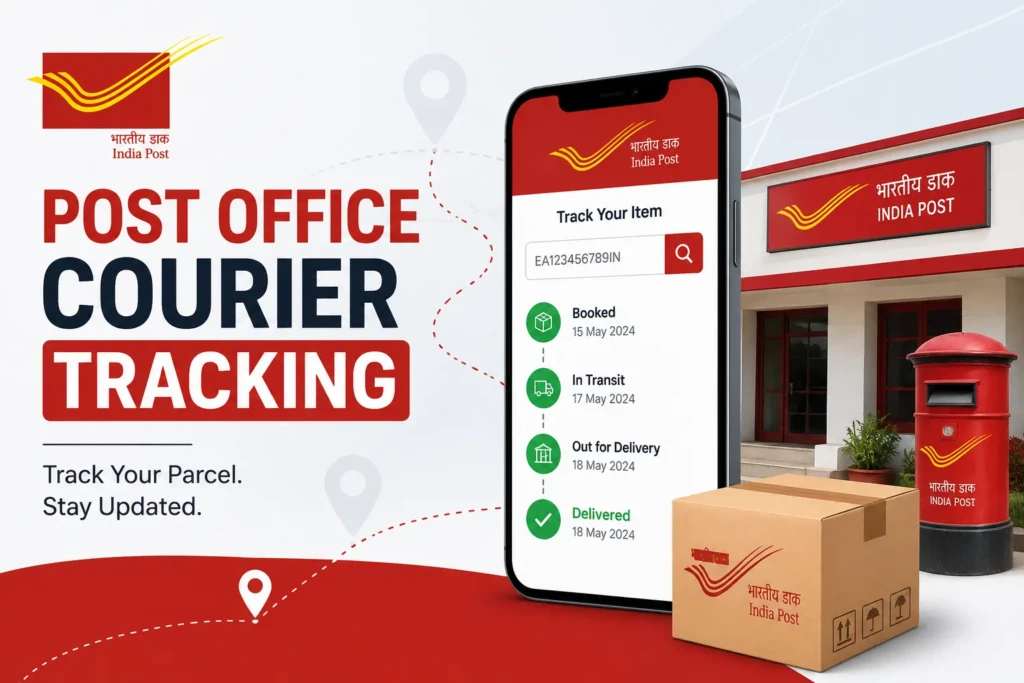
As packages travel across cities, provinces, or international borders, they trigger automated updates whenever their barcode is scanned. To remove the guesswork from your delivery timeline, evaluate this detailed breakdown of standard tracking vocabulary:
| Milestone Status | What is Happening Behind the Scenes | Action Required by the Recipient |
| Manifest Created / Information Received | The merchant or sender has purchased a shipping label and logged the package weight and destination into the database, but the physical box is still at the origin location. | No immediate action. Allow 12 to 24 hours for the first physical scan to occur at the post office. |
| Accepted at Origin Facility | The post office has physically taken possession of the package. It has been weighed, sorted, and placed into a transport bin. | Your shipping timeline officially begins here. Rest assured the package is within the postal network. |
| In Transit / Arrived at Hub | The parcel is moving between distribution networks. It may be on a cargo plane, long-haul truck, or being sorted at a regional warehouse. | Sit back and wait. The item is progressing normally through the logistics pipeline toward your city. |
| Out for Delivery | The package has arrived at the local post office closest to your home. It has been scanned and assigned to a specific delivery vehicle for local route distribution. | Ensure an adult is present at the address. Clear paths to your door, lock up pets, and make sure your doorbell works. |
| Delivered Successfully | The carrier has left the package at the designated location, handed it to an occupant, or secured it inside a lockbox. | Verify receipt immediately. Look at your designated drop zones, porch, or mailbox to retrieve your property. |
| Delivery Attempt Unsuccessful | The mail carrier arrived at your location but could not complete the drop-off due to a locked gate, loose pet, signature requirement, or lack of secure access. | Look for a physical notice slip left at your door. You may need to schedule a re-delivery or pick it up at the local branch. |
| Held at Customs | For cross-border shipping only. The parcel is being checked by international border authorities to verify contents, check paperwork, or assess import duties. | Monitor your mail or email closely. You may receive an official notice to pay import taxes or clarify item details. |
Deep-Dive Troubleshooting: Resolving Complex Tracking Anomalies
Even with highly automated barcode systems, logistics can face hiccups. Understanding the mechanics of how mail moves can help you identify whether a delay is a minor pause or a genuine issue that requires customer intervention.
You can Track: Professional Courier Tracking
Why Your Tracking Number Shows No Information
If you input your code and see a blank screen or an error stating the number does not exist, do not panic. This generally happens for two distinct reasons:
- The Scan Delay: It can take several hours for a physical scan at a retail counter to upload to the main digital servers. If the item was dropped off late in the afternoon, it may not register until the evening processing cycle.
- Typographical Mix-ups: Human error is common when transcribing tracking numbers. Be alert to visual similarities in alphanumeric codes: the number zero (0) is easily confused with the capital letter (O), and the number one (1) can look identical to the lowercase letter (l) or uppercase letter (I).
Navigating a “Stuck” Progress Bar
It is incredibly common for a package to show no movement for forty-eight to seventy-two hours while it is “In Transit.” This does not mean your package is lost. During long-distance transport, a parcel will not receive a single scan while it is locked inside a trailer or container moving across the country. The tracking status will only change once that container reaches a major regional sorting center and is unlocked and unpacked.
Addressing the “False Delivery” Phenomenon
Occasionally, a user will receive an automated alert saying their parcel was successfully delivered, yet their porch or mailbox is completely empty. Before assuming theft, consider these industry realities:
- Pre-Scanning: High-volume couriers sometimes scan an entire batch of packages as “Delivered” while loading their vehicle or when they are one block away from your home to maintain high efficiency. In most cases, the physical delivery happens within a few hours of that notification.
- Alternative Secure Locations: If weather conditions are poor or a front porch is highly visible to a busy street, carriers will cleverly conceal packages behind planters, underneath patio furniture, or leave them with a neighboring apartment manager.
Best Practices for a Seamless and Secure Delivery Experience
To minimize the chances of a package getting lost, delayed, or returned to sender, implement these foundational shipping rules for all future orders:
- Format the Address Impeccably: Always include the full street name, house or apartment number, accurate building codes, and above all, the precise postal code. A single digit wrong in a postal code can reroute a package to an entirely different part of the country.
- Include a Active Contact Number: Print the recipient’s phone number directly on the shipping label. If a courier is lost, cannot find an apartment unit, or encounters a security gate, having a direct line to the customer prevents the parcel from being marked as undeliverable.
- Act Swiftly on Delays: Do not wait weeks to report a missing package. If your delivery window has closed by more than three consecutive business days, immediately reach out to logistics customer support. Most facilities retain security footage and tracking archives for a limited time, making early intervention critical to locating missing items.
Frequently Asked Questions (FAQs)
How long does a standard post office courier delivery take?
Delivery windows depend heavily on the service class selected at dispatch. Local or domestic express shipments generally take 1 to 3 business days, while standard ground shipping can take 3 to 7 business days. International deliveries may take anywhere from 7 to 21 business days depending on customs processing speeds.
Can I track a courier package without a tracking number?
Unfortunately, you cannot look up a package’s live location without the tracking ID. However, if you are the recipient, you can check your online merchant portal, review your email confirmation history, or ask the sender to provide a photograph of the physical shipping receipt.
What should I do if my package tracking has not updated for over a week?
If your domestic shipment shows no movement for more than 5 consecutive business days (or 10 days for international items), it is advisable to open an official inquiry. Contact the delivery network’s customer desk directly so they can initiate a physical dock-search at the last recorded sorting hub.
Why does my international package say “Customs Clearance”?
This means your parcel is currently being inspected by border control officials. They cross-verify the declaration forms, ensure the contents match import regulations, and determine if any local taxes apply. This stage can take anywhere from a few hours to several days, and status updates are typically paused until the parcel is handed back to the local postal team.
Can I change my delivery address after the parcel has been shipped?
Address modifications depend entirely on the specific courier network rules. Some systems allow a “Delivery Intercept” online for a small fee before the final delivery run. If the package is already marked as “Out for Delivery,” the route carrier cannot alter the destination, and the parcel will either drop at the original address or return to the warehouse.
Final Words
Managing shipments in the modern world does not have to be a guessing game. By understanding how tracking milestones work and keeping a close eye on your unique shipping codes, you can successfully bypass delivery anxiety. If you ever notice an extended pause or an unexpected status adjustment on your dashboard, remember that early communication with customer care teams is always the most secure route to getting your parcel safely in hand. Plan your deliveries carefully, verify your credentials, and enjoy a stress-free transit process every time!