Postal Tracking Number
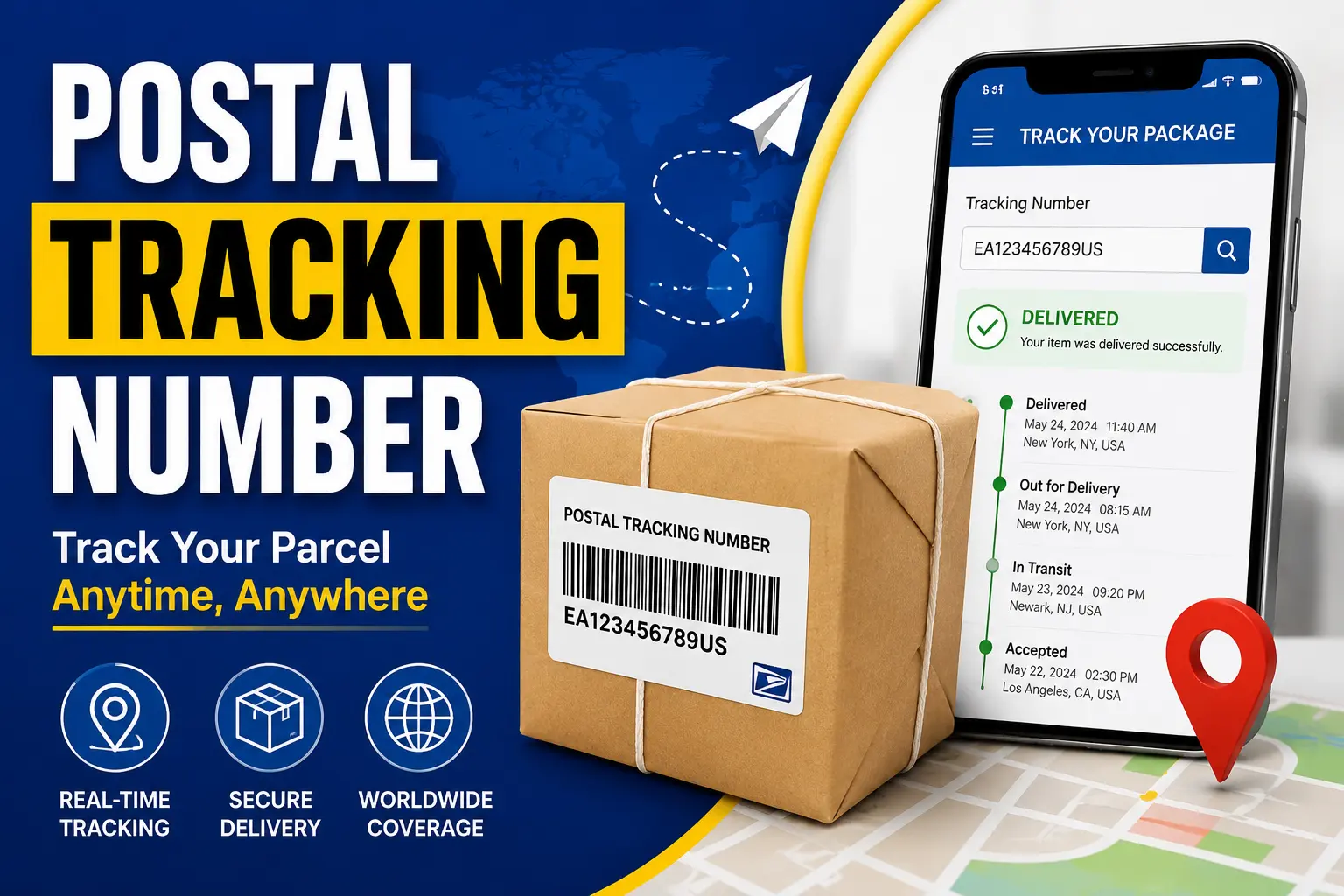
You’ve just placed an order online. The confirmation email lands in your inbox, and somewhere near the bottom sits a string of letters and numbers — your postal tracking number. It looks like a random code, but it’s actually your direct line to knowing exactly where your package is at any given moment.
Track your India Post or Speed Post item
Enter your tracking number on the official India Post tracking page — that is where the live scan data lives. We link you straight there so you do not have to hunt for it.
Open the official India Post tracking page →Opens www.indiapost.gov.in in a new tab. courierztracking.com is an independent guide: we do not store tracking numbers, and we do not generate shipment statuses. India Post’s own system is always the source.
Tracking a different courier? Use the courier finder on our home page.
Whether you’re waiting on a birthday gift, an urgent business delivery, or an international shipment from halfway around the world, understanding how postal tracking works can save you a lot of anxiety — and a lot of unnecessary calls to customer service.
This guide breaks it all down: what a postal tracking number is, how to use it, where to find it, and how to track packages from every major carrier. Let’s get into it.
What Is a Postal Tracking Number?
A postal tracking number (also called a shipment tracking number or parcel tracking number) is a unique identifier assigned to a package when it enters a carrier’s mail or delivery network. Think of it as your package’s fingerprint — no two are the same.
Every time your parcel moves through a sorting facility, crosses a border, or gets loaded onto a delivery truck, that tracking number is scanned and logged. This creates a real-time trail of data that you, the sender, or the courier can follow.
Tracking numbers can look quite different depending on the carrier:
| Carrier | Example Tracking Number Format |
|---|---|
| USPS | 9400 1118 9922 3456 7890 12 |
| UPS | 1Z999AA10123456784 |
| FedEx | 1234 5678 9012 3456 |
| DHL | 1234567890 |
| Royal Mail | AB123456789GB |
| Canada Post | 1234 5678 9012 3456 |
Some numbers are purely numeric; others contain letters. International shipments often follow a standard format defined by the Universal Postal Union (UPU) — a two-letter prefix, nine digits, and a two-letter country code (e.g., RR 123 456 789 US).
Why Postal Tracking Numbers Matter
Before package tracking existed, sending a parcel was essentially an act of faith. You handed it over, paid the postage, and hoped for the best. Today, a tracking number gives both senders and recipients a level of transparency and accountability that simply didn’t exist before.
Here’s why they matter:
- Peace of mind — You know your package hasn’t vanished into thin air.
- Proof of delivery — Businesses use tracking to confirm items arrived safely.
- Dispute resolution — If a package is lost or delayed, the tracking history is your evidence.
- Planning ahead — Estimated delivery dates help you arrange someone to be home.
- Customs visibility — For international shipments, you can see when a parcel clears customs.
Where to Find Your Tracking Number
One of the most common questions people ask is: “Where exactly is my tracking number?” Here are the most reliable places to look:
1. Confirmation or Shipping Email
Most online retailers send a shipping confirmation email once your order has been dispatched. This email almost always contains your tracking number as a clickable link or plain text.
2. Your Online Account
Log in to the retailer’s website and navigate to “Orders” or “My Purchases.” Your tracking number is usually listed alongside the order status.
3. The Physical Receipt
If you shipped a package yourself at a post office or courier drop-off, the tracking number appears on your receipt or label copy.
4. Shipping Label
The tracking number is printed on the shipping label attached to the parcel itself — useful if you’re a business tracking outgoing shipments.
5. SMS or App Notification
Many carriers and retailers now send tracking updates by text message or push notification via their mobile apps.
How to Track a Package Using a Tracking Number
Once you have your tracking number, using it is straightforward. Here are three reliable methods:
Method 1: Go Directly to the Carrier’s Website
This is the most accurate option because the data comes straight from the source:
Simply enter your tracking number in the search field and hit “Track.” You’ll see a timeline of scan events, current location, and estimated delivery date.
Method 2: Use a Universal Package Tracking Tool
If you’re not sure which carrier is handling your shipment, universal tracking platforms can detect the carrier automatically and pull the latest data. Popular options include:
- 17TRACK — Supports 2,000+ carriers worldwide
- Parcel Monitor — Clean interface, wide carrier support
- PackageRadar — Good for international parcel tracking
- AfterShip — Popular with e-commerce businesses
Method 3: Use Google
Here’s a neat trick many people don’t know: you can paste a tracking number directly into Google Search, and it will often identify the carrier and display the latest tracking status without you needing to visit any website.
Understanding Tracking Status Updates
Tracking events can sometimes be confusing, especially when the status hasn’t changed for a few days. Here’s a quick guide to what common statuses actually mean:
| Status | What It Means |
|---|---|
| Label Created | The seller has created a shipping label but hasn’t dropped it off yet |
| In Transit | The package is moving through the carrier’s network |
| Out for Delivery | Your package is on a delivery vehicle headed to you |
| Delivered | The carrier has confirmed delivery at the address |
| Awaiting Pickup | Available for collection at a post office or locker |
| Customs Clearance | The parcel is being reviewed by customs (international) |
| Exception / Delay | Something unexpected happened — check for more details |
| Return to Sender | The package couldn’t be delivered and is heading back |
Tip: If your tracking shows “In Transit” for more than a week without updates, don’t panic immediately. This is common during holidays, peak shipping seasons, or for international shipments crossing multiple countries. Allow a few extra days before contacting the carrier.
International Postal Tracking Explained
Tracking an international shipment is more complex than a domestic package. Your parcel typically passes through multiple carrier networks across different countries, which means:
- Tracking handoffs — Your package may start with one carrier and be handed to a local postal service upon arrival (e.g., USPS hands off to Royal Mail for UK deliveries).
- Customs delays — All international shipments must clear customs, which can take anywhere from a few hours to several days.
- Scan gaps — Some countries have less sophisticated scanning infrastructure, so there may be long gaps between tracking updates.
Common International Tracking Carriers
- USPS / USPS International — Handles US outbound and coordinates with destination country’s postal service
- DHL Express — One of the most reliable for international courier tracking
- FedEx International — Comprehensive global network with real-time updates
- PostNL — Handles packages from the Netherlands, commonly used by European e-commerce
- China Post / AliExpress Standard Shipping — Popular for shipments from China; tracking can be slow to update
USPS Tracking: A Closer Look
Since USPS handles billions of packages annually, it’s worth understanding their tracking system specifically.
USPS tracking numbers come in several formats depending on the mail class:
- Priority Mail: 20–22 digit number starting with 9
- First-Class Package: Starts with 9400
- Certified Mail: Starts with 9407
- Express Mail: Starts with 9270 or EA
You can track USPS packages through:
- The USPS website
- Informed Delivery (free service that emails you daily updates)
- Calling 1-800-222-1811
- USPS mobile app
Pro tip: Sign up for USPS Informed Delivery — it’s free and shows you images of incoming mail and packages every morning before they arrive.
Tips for Successful Package Tracking
Make the most of your tracking number with these practical habits:
- Save your tracking number immediately — Don’t wait until you’re worried. Copy it to your notes app or bookmark the tracking page right away.
- Enable notifications — Most carriers let you opt in to email or SMS alerts for every scan event.
- Check tracking at the right time — Tracking updates aren’t always instant. Give it 24 hours after a package is shipped before expecting regular updates.
- Know the expected timeline — Different shipping speeds mean different delivery windows. Don’t judge a 10-day economy shipment by a 2-day priority standard.
- Contact the carrier, not just the seller — If there’s a delivery issue, the carrier can often resolve it faster than the retailer.
- Document everything — Screenshot your tracking history if a package appears lost. This is critical for filing insurance claims.
What to Do If Your Tracking Number Doesn’t Work
A tracking number that returns no results can be frustrating. Here’s what might be happening:
- Too soon to scan — Label created but not yet dropped off. Wait 24–48 hours.
- Typo in the number — Double-check every digit. One wrong character breaks the whole thing.
- Wrong carrier — You might be entering a USPS number into a FedEx tracker. Try a universal tracker to auto-detect.
- International handoff — Once your package leaves the origin country, tracking may only update once it arrives in the destination country’s postal system.
If none of these apply and your package is significantly overdue, contact the carrier directly with your tracking number and shipment details.
Frequently Asked Questions (FAQs)
1. How do I find my tracking number if I lost my email?
Log into the retailer’s website and check your order history. If the item was shipped, the tracking number will appear there. You can also check your spam folder for the original shipping confirmation email.
2. Can I track a package without a tracking number?
It’s difficult, but not impossible. Some carriers allow tracking by reference number, purchase order, or account number. Alternatively, contact the sender — they should have a copy of the tracking details on their end.
3. How long does USPS tracking take to update?
USPS tracking typically updates within a few hours of each scan. However, during peak periods (holidays, Black Friday) or for certain mail classes, updates can take 24–48 hours between scan events.
4. What does “In Transit, Arriving Late” mean on USPS tracking?
This status means your package is still moving through the network but has encountered a delay — usually due to weather, high volume, or a missed connection at a sorting facility. USPS is aware of the delay and is still working to deliver it.
5. Can I track an international package from China?
Yes. Most Chinese e-commerce shipments use tracking numbers that can be followed through 17TRACK, Cainiao (AliExpress’s logistics platform), or the destination country’s postal service website once the parcel arrives in your country.
6. Is my tracking number the same as my order number?
No — these are two different things. Your order number is assigned by the retailer at the time of purchase. Your tracking number is assigned by the shipping carrier when the package is dispatched. They’re separate, though you’ll often find both in your shipping confirmation email.
Conclusion: Take Control of Your Deliveries
A postal tracking number is more than just a string of digits — it’s your window into one of the most complex logistics networks in the world. Every scan represents a real person handling your package, and every status update is a small confirmation that your parcel is making its way to you.
The key takeaways:
- Always save your tracking number as soon as you receive it
- Use the carrier’s own website for the most accurate, real-time data
- Universal trackers like 17TRACK are invaluable for international shipments
- Understand common status messages so delays don’t catch you off guard
- Reach out to carriers directly if something seems seriously wrong
Now that you understand exactly how package tracking works — from domestic USPS parcels to cross-border international shipments — you’re fully equipped to track any package, anywhere in the world.
Ready to track your next package? Bookmark your carrier’s tracking page, enable shipment notifications, and take the guesswork out of delivery day.
Have a question about a specific tracking situation? Drop it in the comments below — we’d love to help.